
Is Your VW Still Under Warranty? Check Here Your VIN
Enter your VIN to get a clear warranty summary designed for VW owners, used-car buyers, and private sellers, delivered instantly as an easy-to-read online result you can save and share. If you’re wondering how to find out if my vw is still under warranty, this is the fastest place to start.
What is a Volkswagen Warranty Check?
A Volkswagen warranty check is a simple check that allows you to verify the warranty coverage of any vehicle using the VIN, license plate number, or the year, make, and model information of the vehicle.
Using the warranty check tool, anyone can be sure of any Volkswagen warranty coverage. Our tool provides:
- Type of coverage
- Dates when it began and will end
- Remaining time or mileage.
What You Risk Without Warranty Details
When warranty info is missing or unclear, people usually find out the hard way,, during a used-car deal, or after they’ve already paid. Here are the most common “oh no” outcomes that happen without a quick way to check vw warranty status.
❌ Coverage Status Unknown
Many people assume “factory warranty” still applies, but it may have already expired by time or mileage
❌ Buying a used car with no protection
Without checking, you might buy a vehicle thinking it’s “still under warranty,” then discover it isn’t, reducing the car’s value and increasing your risk.
❌ Overpaying for third-party warranties
You might buy an extended warranty unnecessarily when the vehicle is already covered, or purchase overlapping coverage that provides little extra value.
❌ Warranty transfer issues
If ownership transfer rules aren’t met, you could lose coverage that you thought automatically followed the vehicle.
❌ Disputes with sellers or dealerships
If warranty status isn’t verified early, disagreements about “what was promised” become harder to resolve.
❌ More stress and wasted time
No warranty check often means extra calls, repeat visits, and “he said/she said” between seller, shop, and dealer. A quick verification upfront saves headaches.
How Our VIN Tool Helps Check Warranty Status
We built this tool for VW owners and used-car buyers who want a straight answer. Instead of digging through paperwork or waiting for a dealership callback, enter your VIN to get a clean, easy-to-read report showing your coverage status and key dates, including:
✅ Warranty Period
Shows when the warranty starts and ends, so you can see if it’s still active.
✅ Mileage and Time Limits
Tells you how long the warranty lasts by miles and by time.
✅ Covered Parts and Services
Lists which repairs and components are included under warranty.
✅ Recall History
Allows you to see if the vehicle has any past or pending recalls.
Get More Than Just Volkswagen’s Warranty Details
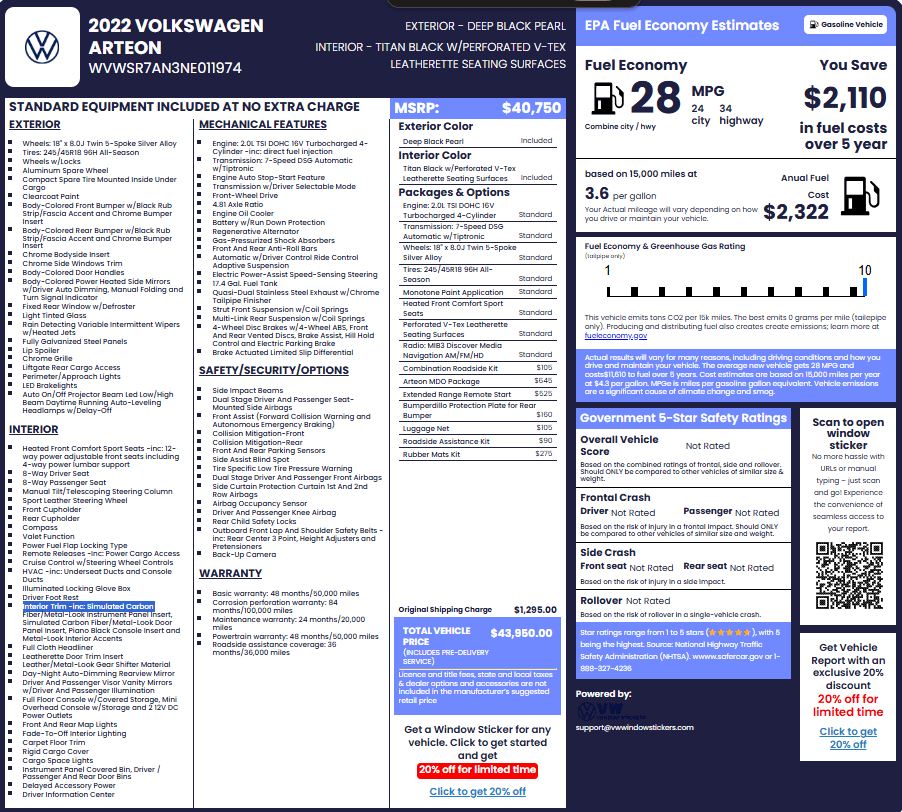
This report gives you more than basic warranty information. It provides a clear snapshot of your VW’s full factory setup, key specs, and important records, so you can understand what the vehicle originally came with and what to expect as an owner or buyer.
Original MSRP
Shows the vehicle’s original price when it was first sold new, which can help you estimate how it was positioned and compare trims.
Standard and Optional Features
Lists the features that were included from the factory, along with upgrades that may affect comfort, tech, or resale value.
Factory Options and Packages
Breaks down installed option packages (like convenience, sport, or tech packages) so you can confirm what the car was built with.
Engine and Drivetrain Details
Provides core engine specs and drivetrain setup (such as FWD or AWD), helpful for maintenance planning and buyer confidence.
Transmission Type
Identifies the exact transmission (for example manual, automatic, or DSG), which matters for driving feel, service needs, and long-term reliability.
Safety and Emissions Information
Highlights safety-related equipment and emissions details that may be important for inspections, registration, and compliance.
Fuel Economy Ratings
Includes fuel economy numbers when available, making it easier to estimate running costs and compare similar models.
Paint Code Information
Shows your vehicle’s factory paint code so you can match the exact original color for touch-ups, repaints, or bodywork without guessing.
Steps to Check if Your VW Is Still Under Warranty by VIN
You can check your warranty at home using your VIN. Just follow these simple steps:
- 1
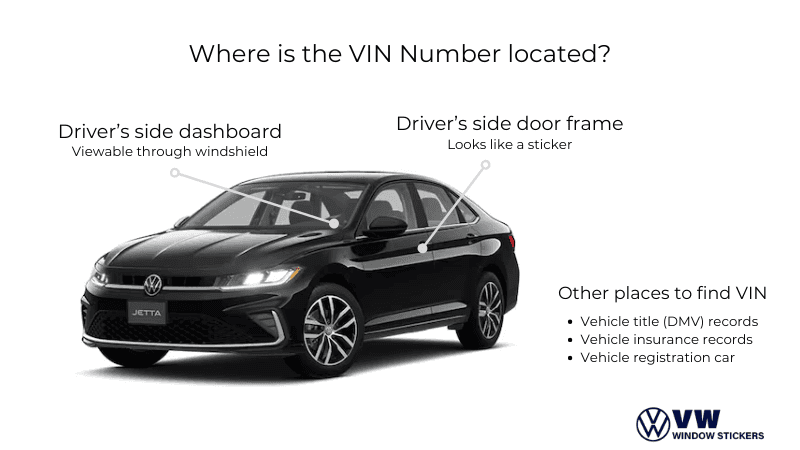
Locate the VIN
First, find your Vehicle Identification Number (VIN). You can usually see it on the dashboard near the windshield, on the driver-side door sticker, or in your vehicle documents (registration, insurance, service papers). - 2
Enter the VIN in the Form
Open the form above, type in your VIN carefully, then submit it to start the lookup. - 3
Get Your Report
Review the preview, complete the payment step, and download the full report. This is where you’ll see whether the car still has warranty coverage. - 4
Check the Warranty Details
After you download the report, look for key items like: ☑️The type of coverage ☑️The original warranty length ☑️What’s still remaining, based on time and mileage
Once you run the VIN check, you can also view other helpful information, like MSRP, options and packages, transmission Type, NHTSA safety ratings, fuel economy Ratings, interior and exterior colour and others
Alternative Ways to Check Your Volkswagen Warranty
If you want to confirm whether your VW is still under warranty, you’re not limited to an online VIN tool. You can also verify coverage through official sources like dealerships and the manufacturer.
1. Contact a Dealership
A VW dealership can check warranty status using details like the year, model, and VIN. Common options include:
 Call the dealership:
This is often the fastest way to ask if the warranty is still active. You can also visit in person if you want them to inspect the vehicle.- Use the dealer’s online portal:
Some dealerships offer online systems where you can view service history, recalls, and warranty details. If your dealer doesn’t have this, try the manufacturer’s website. - Review your purchase paperwork:
Sales documents sometimes include warranty terms, such as length and mileage limits, which helps you estimate whether coverage remains.
2. Check the Odometer
Compare your current mileage to the warranty mileage limit. If the car has passed the limit, warranty coverage is usually no longer valid.
3. Look in the Owner’s Manual
The owner’s manual often outlines warranty length, what is covered, and important conditions. It’s a helpful quick guide, especially if you can’t access the internet.
4. Contact the Manufacturer
You can find standard warranty details on the manufacturer’s website. If you still can’t confirm coverage, use the official contact channels to ask for a clear warranty status explanation.
Benefits of a VW Warranty Check by VIN
One benefit is you don’t get to miss out on anything. All new cars and some used ones come with warranty coverage; checking it ensures you can make claims whenever necessary and don’t need to pay for repairs that should be covered.
Some other benefits of a Volkswagen warranty check by VIN include:
Determining if the Volkswagen is still covered
A warranty check tells you whether the Volkswagen is still under the manufacturer’s warranty (usually up to 3 years or more from the purchase date).
Identifying remaining coverage
Knowing the warranty’s time and mileage remaining helps owners plan and budget for repairs.
Avoid costly repairs
Volkswagen owners can save vast sums of money that could have gone into many repairs if the vehicle warranty is still valid.
Negotiating power for used car buyers
If you’re buying a used Volkswagen, verifying whether it’s still under warranty can provide leverage in negotiations.
What Does a Car Warranty Cover?
There are generally two kinds of warranties you can find on vehicles:
1. Bumper-to-Bumper or Comprehensive
The bumper-to-bumper warranty, also known as a comprehensive warranty, is one of the most common and extensive warranties available.
As the name suggests, this warranty covers almost every part of the vehicle, from the front bumper to the rear bumper, leaving out those typically worn out. Its duration is 4 years or 50,000 miles, whichever comes first, and is transferable to subsequent owners.
2. Powertrain
The powertrain warranty is focused on the core components that make the vehicle run, specifically the engine, transmission, and drive axle. It provides protection against major mechanical failures.
Powertrain warranties typically last longer than bumper-to-bumper warranties, so anticipate around 5 years or 60,000 miles of coverage.
Aside from these two broad types, some manufacturers also have:
- Rust/Corrosion warranty: protects the vehicle’s body and paint from damage because of corrosion.
- Emissions warranty: cushions your vehicle from repair costs and specific components involved with the emissions system.
- Battery warranty: Covers the car battery for 2-8 years.
Note that some vehicle parts are not covered under the manufacturer’s warranty, such as:
- Items that are subject to typical wear and tear (e.g., tires, brakes, wiper blades).
- Damage resulting from user actions, such as neglect, misuse, or inadequate maintenance.
- Changes or aftermarket components added by the owner.
Types of Car Warranties
A car warranty helps pay for certain repairs for a set time or mileage. Coverage can come from the manufacturer, a dealership, or a third-party company. Here are the main types:
Manufacturer’s Warranty
This is the warranty that comes with a new car. It protects you from factory defects and usually includes:
- Bumper-to-bumper: Covers many systems like A/C, electronics, and interior features (with some exclusions).
- Powertrain: Covers major parts like the engine, transmission, and drive axles.
Extended Warranty
This is extra coverage you buy to keep protection after the factory warranty ends. It can be sold by the car brand, a dealer, or another company, and it helps cover repair costs for a longer period.
Certified Pre-Owned (CPO) Warranty
This comes with a used car that passes a strict inspection and meets the maker’s standards. It often covers key systems (engine, transmission, and some electrical parts) and may add 1–2 years of coverage. It usually starts from the car’s original “in-service” date, not the day you buy it.
Emissions Warranty
This covers parts that control emissions, as required by law. It may include:
- Coverage for emissions-test failures (shorter term)
- Longer coverage for major emissions parts like the catalytic converter and engine computer
Check ALL Volkswagen Models
Our warranty check tool works with all Volkswagen models, including classic cars. Some popular models you can check are:
| Tiguan | ID.4 | Type 3 Fastback | Atlas Cross Sport |
| Atlas | Passat | Type 1 Karmann Ghia | Golf Alltrack |
| Taos | Arteon | Routan | Golf SportWagen |
| Jetta | Polo | Touareg | Jetta GLI |
| Gold (GTI & Golf R) | Beetle | Tiguan LWB | New Beetle |
← Scroll horizontally to see more →
Get the Full Picture, Not Just Warranty
Get Your Warranty Summary Now
If you’re buying a used VW, budgeting for repairs, or trying to verify what’s still covered, start here.
Run your report now and get a clear answer fast
FAQ About VW warranty by VIN
Using the VIN to generate a warranty report, this is the fastest way to find out if my VW is still under warranty without digging through paperwork.
Most tools show in-service date, coverage end date, mileage limit, and warranty categories. That’s the core information people want when doing a Volkswagen warranty lookup.
A warranty report focuses on coverage status and key dates; a recall check focuses on safety/service campaigns. People often confuse them when searching how to check the warranty on a car, they are not the same.
Common locations: dashboard near the windshield, driver door jamb sticker, registration, and insurance documents. Make sure you enter all 17 characters.
Usually, an extended warranty starts after the factory warranty ends. But some third-party plans start right away when you buy them. The start date depends on the company and the rules in your warranty contract.
Most new cars have a factory warranty that often lasts about 3 years or 36,000 miles for full (bumper-to-bumper) coverage, and about 5 years or 60,000 miles for the powertrain, whichever comes first.
But this can change depending on the brand, model, and warranty plan. Some car makers offer longer powertrain coverage, like up to 10 years or 100,000 miles.
Common reasons include a typo, region mismatch, recent purchase/registration delays, or imported vehicles. If you’re trying to do a volkswagen warranty check by vin and can’t retrieve results, contact a dealer with your VIN and mileage.
Often yes, but rules vary by program and region. If you’re doing a vw warranty lookup before buying, ask for supporting documents and verify transfer terms.
Yes, as you may have guessed, a vehicle with an active Volkswagen warranty will definitely have more value than one without any. Here’s how a car warranty can affect resale value:
- Warranty transferability: If the warranty is still valid and can be transferred to the new owner, it adds value. Buyers appreciate knowing they’re covered for repairs, which reduces their risk and increases the vehicle’s appeal.
- Perception of quality: A transferable warranty signals that the car has been well-maintained by professionals, giving buyers more confidence in its quality and reliability.
- Reduced repair costs: When a vehicle has warranty coverage, buyers know they won’t have to pay for covered repairs. This increases the resale value.